How to avoid green water problems
Throughout the season

When your pool water turns green and the walls become slippery, it's a sign that algae is forming. Here's our expert advice on how to keep your water crystal-clear.
Fight algae and phosphates effectively by:


Green water: the number one pool care concern
-
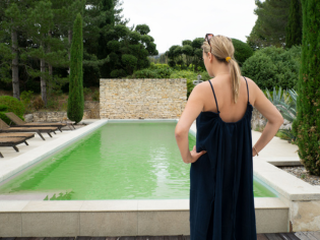
Algae are a major challenge in pool maintenance
The majority of pool owners are impacted
Whether green or brown, whatever their form, algae remain one of the most persistent challenges in pool care.
Up to 80% of pool owners are affected, yet fewer than one in three take preventive action with an algaecide.
-
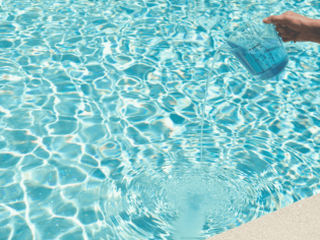
Effective pool care starts with prevention
Ensure long-lasting protection against algae formation
An algaecide prevents the development of algae, bacteria and fungi in your pool water, while protecting your pool surfaces and filtration system from damage.


What causes green water?
The growth of microscopic algae in swimming pools can be linked to a number of factors, which can combine to undermine the effectiveness of disinfectants.
There can be many causes for this growth, including technical, climatic and human factors. When combined, these factors accelerate the process.
If your pool water is turning green, don't panic! We have a complete range of high-performance, effective solutions for you.
Phosphates, food for algae
-
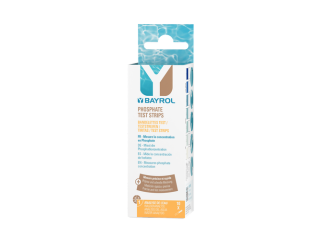
Remember to measure the phosphate level in the water!
Although essential, measuring phosphate levels is often overlooked. That's why we've developed a new Phosphate Test Strips kit that allows you to analyze the phosphate levels in your pool water. Quickly and easily.
-
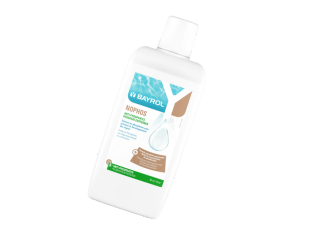
Do you have excess phosphate ?
For preventive action
- If you have a sand filter, place Superflock Plus, a flexible flocculant cartridge specially designed for sand filters and containing lanthanum, a highly effective anti-phosphate agent, in your skimmer basket. The product acts effectively and continuously against cloudy water while eliminating phosphates.


What causes green water?
The growth of microscopic algae in swimming pools can be linked to a number of factors, which can combine to undermine the effectiveness of disinfectants.
There can be many causes for this growth, including technical, climatic and human factors. When combined, these factors accelerate the process.
If your pool water is turning green, don't panic! We have a complete range of high-performance, effective solutions for you.
Phosphates, food for algae
-
Remember to measure the phosphate level in the water!
Although essential, measuring phosphate levels is often overlooked. That's why we've developed a new Phosphate Test Strips kit that allows you to analyze the phosphate levels in your pool water. Quickly and easily.
-
Do you have excess phosphate ?
- If you have a sand filter, place Superflock Plus, a flexible flocculant cartridge specially designed for sand filters and containing lanthanum, a highly effective anti-phosphate agent, in your skimmer basket. The product acts effectively and continuously against cloudy water while eliminating phosphates.
Pool algae: the essentials to eliminate them effectively
-
The appearance of algae can have several causes, which may combine and reduce the effectiveness of the water treatment products used for your pool maintenance.
✅ Algae are living organisms
that can develop rapidly in your pool water.✅ Algae feed on phosphates
which promote their growth and proliferation in the pool. Phosphates are introduced by bathers, leaves, organic debris and are also carried into the pool by rainwater.✅ Algae encourage the development of impurities and bacteria
in your pool water, which can pose a risk to bathers’ health.✅ Slippery algae deposits create a risk of slipping
and can lead to accidents around the pool. -
Only by accurately identifying the symptoms can you apply the right treatment protocol to resolve the issue.
Algae can be distinguished by their colour (green algae) and by their appearance (slimy or sticky deposits that cling to surfaces, or particles that detach and float freely in the water).
GREEN ALGAE
- Pool floor and walls become slippery, with algae firmly attached to the surfaces
- Pool water turns green or cloudy
- Impurities accumulate and algae remain suspended in the water
👉 How to treat green water problems step by step
-
Algae growth can be caused by several factors, which often combine and reduce the effectiveness of disinfectants.
These causes may be technical, environmental or linked to pool usage. Insufficient disinfection, high pH levels, poorly maintained filtration (scaled, ageing or contaminated filters), inadequate filtration time or high phosphate levels—all of these can lead to algae developing in your pool.
▪ High pH levelsOne of the main causes of algae formation is an imbalance in the water’s acid-alkaline equilibrium. By analysing your pool water, especially the pH, you can determine whether it is too acidic (low pH) or too alkaline (high pH).
Before any treatment, regularly measure your pool’s pH using BAYROL testing solutions. A pH that is too high or too low reduces the effectiveness of treatment products and encourages algae formation. The ideal pH range is between 7.0 and 7.4.
▪ Climatic factors
While warm water is pleasant for bathers, it also creates ideal conditions for algae. High temperatures, unstable or stormy weather, heavy rainfall and external contamination all promote algae growth.
Heat also accelerates chlorine consumption, reducing its effectiveness.
Add fresh water regularly, and check and adjust the pH during periods of unstable weather. Increasing disinfectant levels helps reduce the risk of water turning green.
▪ Technical factors
Poor filtration is a key contributor to algae growth. A clogged filter or insufficient daily filtration time allows algae to develop rapidly. Pump malfunctions or inadequate circulation should also be considered.
For sand filters: regularly check the pressure gauge. Backwash the filter approximately once a week, or whenever pressure increases by 0.2 to 0.3 bar compared to the clean filter level.
For cartridge filters: clean cartridges more frequently, as they clog faster.
Replace the filter media or cartridges before they reach the end of their lifespan.
▪ Human factors
Heavy pool usage can significantly impact water quality. Bathers introduce organic matter (sweat, hair, sunscreen), which contributes to water contamination.
Poor pool maintenance, such as not emptying skimmers, not removing debris or allowing leaves to accumulate, leads to increased phosphate levels, which feed algae growth.
Clean your pool regularly (at least once a week) and consider using an automatic dosing system. In cases of heavy usage, installing a footbath can help limit contamination. Encourage bathers to shower before entering the pool to maintain optimal water quality.
-
ALL YEAR ROUND!
Add an algaecide regularly to prevent algae growth—especially during periods of strong sunlight and high temperatures, which accelerate their development.
Prevention is easier and more cost-effective than treating algae once they have taken hold in the pool.
BUT ALSO DURING WINTER!
When winterising your pool, use a dedicated winter treatment product to prevent algae from developing while the pool is not in use.
Our winterising solution, Puripool® Super, combines an anti-limescale agent with an algaecide to prevent scale formation and inhibit algae growth throughout the winter period.
-
Using a preventive algaecide helps limit algae growth and supports a more measured approach to pool care—simpler and more cost-effective than having to eliminate algae once they are present.
COMBATING GREEN ALGAE
Preventive treatment
BEFORE algae appear, to prevent their formation and proliferation, BAYROL offers Desalgin® JET, the non-foaming formula ideally suited to highly agitated water.-> How to solve a green water problem step by step
-
Follow our step-by-step guidance to combat algae effectively by consulting our dedicated solution pages:
-> Solve a green pool water problem step by step
-> Solve a turbid water problem step by step
-
If you are unable to permanently eliminate algae from your pool, it may be due to high phosphate levels.
Introduced by rain, organic debris or bathers, phosphates act as nutrients for algae, promoting their growth and proliferation.
Once phosphate levels in pool water exceed a certain threshold, algae can multiply rapidly and become difficult to eliminate. In fact, high phosphate concentrations (above 0.1 mg/L) reduce the effectiveness of chlorine and standard algaecides.
Measure phosphate levels using Phosphate Test Strips. Then, if necessary, use Nophos to act directly on phosphates. Its highly concentrated lanthanum-based formulation binds and aggregates phosphates, allowing them to be captured by the filter and effectively removed from the water.
-
For optimal winter protection, treat your pool with Puripool® Super. Its dual-action formula prevents scale deposits and effectively inhibits algae development, keeping your water in perfect condition throughout winter and making spring reopening effortless.
What causes green water?
The growth of microscopic algae in swimming pools can be linked to a number of factors, which can combine to undermine the effectiveness of disinfectants.
There can be many causes for this growth, including technical, climatic and human factors. When combined, these factors accelerate the process.
If your pool water is turning green, don't panic! We have a complete range of high-performance, effective solutions for you.


